








PLOT: A sheltered girl with telekinetic powers is bullied, leading to a horrific, bloody incident due to her domineering mother’s influence.
REVIEW: I would consider Mike Flanagan to be one of the greatest horror filmmakers out there, and I always look forward to anything he makes. Like most, I was a little trepidatious when it was announced that we would be getting yet another Carrie adaptation (that makes 4, for those counting). But “In Flanagan We Trust”, so I just sat back and waited till I could judge it for myself. While our EIC Chris Bumbray was lucky enough to see the first two episodes at TIFF last month, I was fortunate enough to sit down with the entire season. Since I am such a Flanagan fan, I actually ended up watching the show twice over a month, to really make sure I had my thoughts in order. And I’ll be honest: I was left very disappointed.
While this review will be spoiler-free, I do consider the familiar plot beats to be fair game. Everyone knows what happened at prom, so I’m not going to dance around it. Though obviously, I’ll be avoiding the massive details that are changed within those familiar instances.
Carrie, of course, follows the story of Carrie White as she gets bullied at school, has to contend with her overly religious mother, and her burgeoning telekinetic abilities. It’s a story that we’ve seen told many times at this point, so there are always going to be differences. Some of them really work, like Carrie having been homeschooled and being forced into public school by the courts. Or just how much social media and cyberbullying take the place of the more in-your-face form of bullying we’ve seen in the past. The narrative is told a bit out of order, with interviews with the people who survived Prom, giving us some ominous foreshadowing. While this is something from the book, it’s utilized in a very corny way, and Carrie’s unique abilities are diluted because of it.
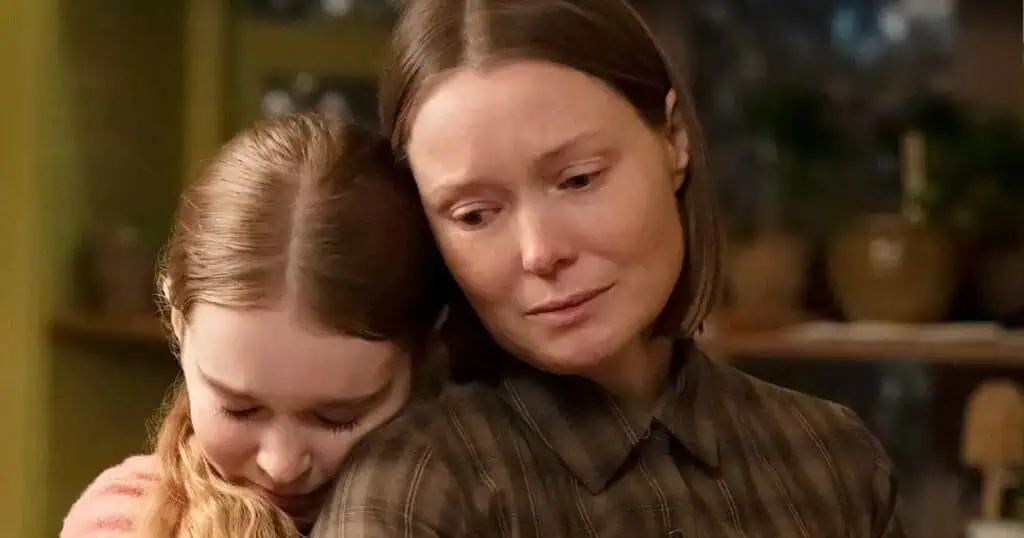
It has to be said that Summer Howell delivers an absolutely breathtaking performance as Carrie White. There’s a sweetness, an innocence, and even some ignorance to the real world that makes you want to protect her. It makes the bullying we do get all the more effective because Carrie can’t even comprehend why they’re being so mean to her. She has a monologue about “The Wonderful Things You Will Be” that is absolutely heart-wrenching. Carrie’s desire for knowledge and love for books works so well as a contrast to her social media-obsessed classmates. Her desire to connect with others just makes her all the more tragic.
I think most of us were over the moon at the casting of Samantha Sloyan as Margaret White, after she was so detestable as Bev Keane in Midnight Mass. She could essentially play Bev, and it’d be perfect as Mrs. White. And sure, there are some similarities between the characters with the psychological manipulation and religious fearmongering, but Margaret is a far cry from any form we’ve seen her in before. Past adaptations had her scared of Carrie, in this, Carrie is the only thing that she cares about. Which means many of their interactions in the latter half of the story simply don’t make much of an impact. I really disliked where her story ended up.
One of the advantages of having 8 episodes to tell a story versus just 90 minutes is that we get considerably more character development. Some of the characters from the novel are pretty stereotypically evil, especially when it comes to the high school girls, so they have been toned down. But that also means that our payoffs aren’t nearly as satisfying. Sometimes it works, like Sue Snell being much more humanized and being a good person right from the onset, and sometimes it doesn’t, like with Chris Hargensen.
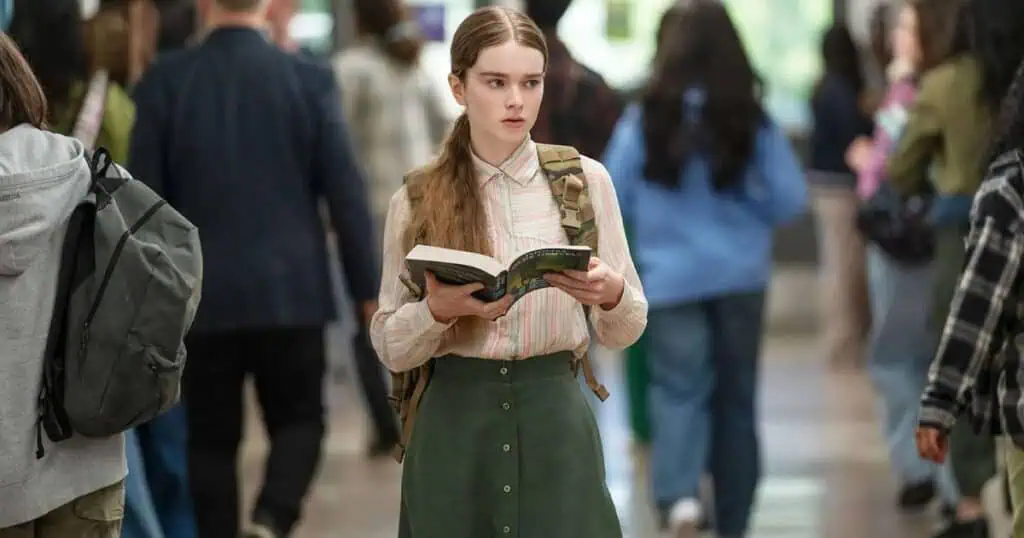
I’ve always loved how evil Chris is in the novel and other adaptations. There is practically no good bone in her body, and she’s almost comically evil. But in an effort to add layers to her, she’s stripped of what made her character so satisfying to hate. I don’t need to relate to Chris, I already have other characters for that. I want Chris to be the conduit for all the bullying Carrie has gone through and for the ultimate payoff: Carrie getting her revenge. And it’s nothing against Alison Thornton, who does a great job in the role, and actually made me feel bad for her during her big confrontation with Carrie. Like Bev Keane, sometimes you just want to see an irredeemable character get their comeuppance. Screw making them sympathetic.
As is often the case, many actors get their chance to shine here. Amber Midthunder, Matthew Lillard, Rahul Kohli and Michael Trucco all bring their characters to life. But it’s Tim Bagley who finally gets the spotlight that the absurdly underrated actor deserves, making guidance counselor Mr. Morton one of the best additions. He really shows Carrie the bright spot of her schooling and how other people shouldn’t affect your own joy in life. Admittedly, there are some performances from some of the side characters that are very unnatural and really took me out of the story. Usually, there’s much more consistency in Flanagan projects, but it’s hard not to notice the weak links in this one. Thankfully, it’s none of the principal cast.
While I can’t get into much of her character due to spoilers, Emaline was a mistake of epic proportions. She makes Carrie a worse character and significantly dilutes the prom sequence. Excluding her and her storyline would have greatly improved the season overall. She really rubbed me the wrong way.

Flanagan is very clearly not looking at Carrie as a standalone story, as it seems to be weaving in elements to make this an overarching universe. While they aren’t made by the same company, this could easily exist alongside that of MGM+’s The Institute. I’m sure that this is a way of planting seeds for The Dark Tower, which brings the Stephen King Universe together in an interesting way. But here, it can feel a little “MCU-like” where the story is focused on a greater narrative than the more personal story of Carrie White. I half-expected the True Knot from Doctor Sleep to show up. Carrie has always been a small, intimate story, so it can be strange to see it get the Stranger Things treatment with mystery organizations and conspiracy theories.
I think the biggest disappointment is the entire set piece at prom. One of the reasons I watch horror is for the cathartic release when bad people finally get their comeuppance. Yet, everything about it just feels like a copout. There’s too much CGI, too many random characters, and Carrie loses way too much of her agency. And in terms of the actual chaos of the event itself, even the TV movie from 2002 does more with it. It doesn’t help that the entire show is building towards this moment, and it was already done so well back in 1976.
I really wanted to love Mike Flanagan’s Carrie, but outside of the performances, I found myself getting very frustrated at many of the choices. The second half of the season steps on many of the elements that made the first half great. And since this is a TV series, with two more seasons planned, many of the character fates are changed, which really ruins some of the emotional payoff. Despite a lot of my negativity here, I liked the show enough, but I just couldn’t connect to it in the way that I wanted.
The entire first season of Carrie is now streaming on Prime Video.