


![Lulu Takes [Spoiler] to Hospital in Jan. 15 Recap](https://www.comingsoon.net/wp-content/uploads/sites/3/2026/01/MixCollage-16-Jan-2026-10-35-AM-4914.jpg?resize=1200,630 "Lulu Takes [Spoiler] to Hospital in Jan. 15 Recap")





:quality(85):upscale()/2026/01/02/072/n/1922564/79d389f869586660c6ef52.99623592_.jpg "Coach Kisslock Frame Bag Review with Photos")
:quality(85):upscale()/2025/12/02/798/n/1922564/70eb73a4692f2b61a84d05.78629684_.png "Calvin Klein Short Puffer Jacket With Scarf Review")
:quality(85):upscale()/2025/11/28/911/n/1922564/6007a1e4692a0b7e0754d6.70992304_.jpg "Amazon Black Friday Fashion Deals to Shop")
:quality(85):upscale()/2025/10/13/707/n/1922564/6af5db6368ed21dfb8d978.04319267_.png "7 Best Béis Travel Bags, According to Our Editors")
![‘Killer Whale’ is the First Flop of 2026 [Review]](http://wickedhorror.com/wp-content/uploads/2026/01/KILLER-WHALE_3-scaled.jpg "‘Killer Whale’ is the First Flop of 2026 [Review]")




By 1983, the slasher cycle was dying down. It had, for the most part, run its course. Halloween, Terror Train, The Prowler, Prom Night, we’d seen so many in just a few years and it felt like the well had run dry. Even the Friday the 13th franchise was, at the time, gearing up to kill Jason with a proposed “final chapter” for 1984. If a slasher was going to survive in this environment it would have to feel different. This led to eccentric cult favorites like Sleepaway Camp. It also led to Curtains.
Curtains is a bizarre slasher, but that’s part of its appeal. Moody and surreal, it plays more like a Canadian giallo, one of many similarities it shares with Bob Clark’s Black Christmas even though the two have their own stark differences. People don’t always associate the slasher genre with Canada, but the country has produced some of the all-time greats—not only Black Christmas, but My Bloody Valentine, Prom Night, Terror Train and Happy Birthday to Me as well. Even still, Curtains manages to stand out from the pack if only for its weirdness alone.
But weird and surreal as it might be, one of the most intriguing things about Curtains is that, in an era long before horror would go deep into meta with New Nightmare and Scream, Curtains is set in and around the film industry. Granted it’s far from the first or last to do so. Return to Horror High is a great slasher about the production of a horror film. What sets this one apart is its singular focus on trying to make it in the industry as an actress.
That’s the basic set-up. All of these characters, all from different walks of life, are actresses competing for the same part, which seems unlikely as they have virtually nothing in common. Each of them needs to be cast for different reasons and are desperate to prove themselves. And, of course, they’re being picked off one-by-one. It’s insanely poignant—even if it’s a bit too on-the-nose—that the killer in Curtains wears an old age mask. That’s one of the biggest fears of any actor and is a pressure that has always been placed on actresses in particular. If you don’t stay young and beautiful, you don’t have a career. That ageism is still relevant over thirty-five-years later. The fact that the killer takes on the appearance of an “old hag” makes every kind of sense.
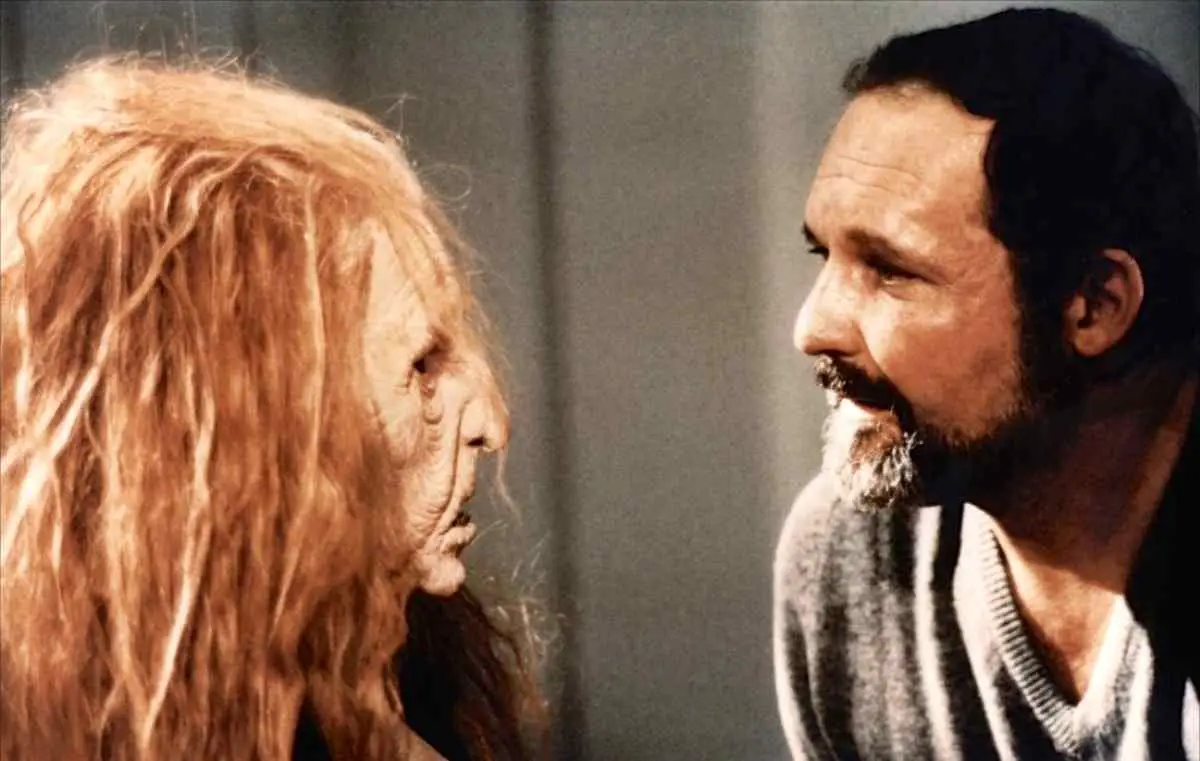

It’s particularly noticeable in the struggle of Samantha, who is clearly made out to be the obvious pick for the killer from the very beginning. She’s an aging star, she’s trying to bounce back after an apparent psychotic break. She admitted herself to an institution to prepare for a role and then was simply left there, and now even the director, Stryker, who knew what she was doing, believes her to have lost her mind. And while it’s done in a very offbeat way in Curtains, that’s still a sharp note on the industry, all the same. When you get older in Hollywood, people stop listening. They don’t care. They’re looking for someone younger and if they see an excuse to throw you to the curb, they’ll generally take it.
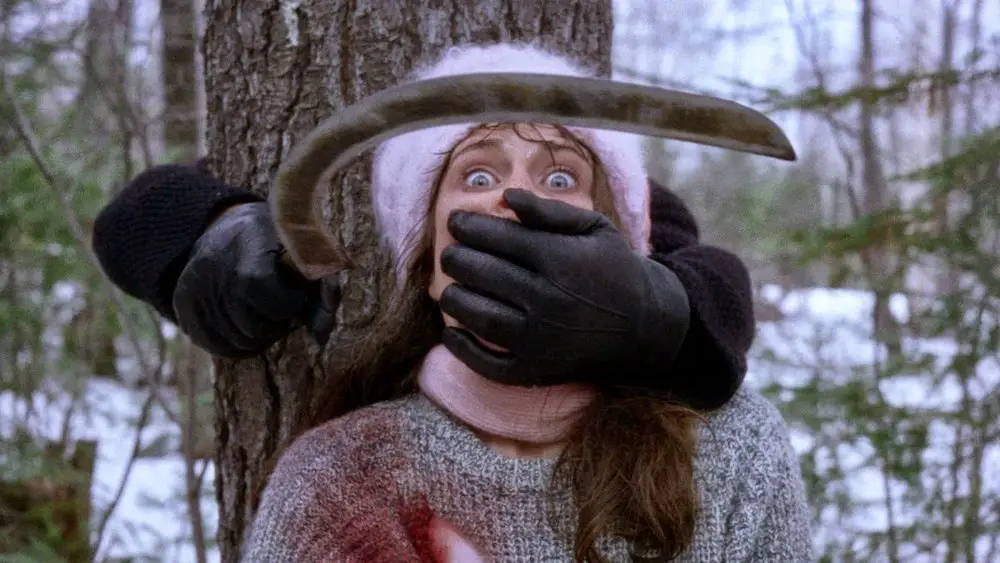
While Curtains has a very clear Agatha Christie-esque setup, it counterbalances this in an interesting way with some decidedly surrealist sensibilities. The ice skating sequence is the highlight of the film. If anyone even knows what Curtains or has ever heard of it, this is the first sequence that comes to mind. This is the one people remember. It’s such a standout scene, even though it’s about as far from subtle as anything could possibly get. Christie is literally skating for her life away from a killer, dressed like an old woman, carrying a sickle.
One of the most interesting things about Curtains and its ensemble of actresses is the way it explores how any actor will try to force themselves into a part if they want it badly enough. It goes beyond actors too. If people are desperate enough for something, they’ll insist it’s the job they were meant for. Each of these women insist that the part of Audra speaks to them, specifically. But these are all very different women who have almost nothing in common.
I think it’s incredibly fitting that, to emphasize this, we’re given almost nothing about exactly who Audra is. She’s a phantom. She’s something they’re chasing that means something completely different to each one of them. Audra’s a shadow character hanging over the whole film, even if she’s totally fictional within the narrative.
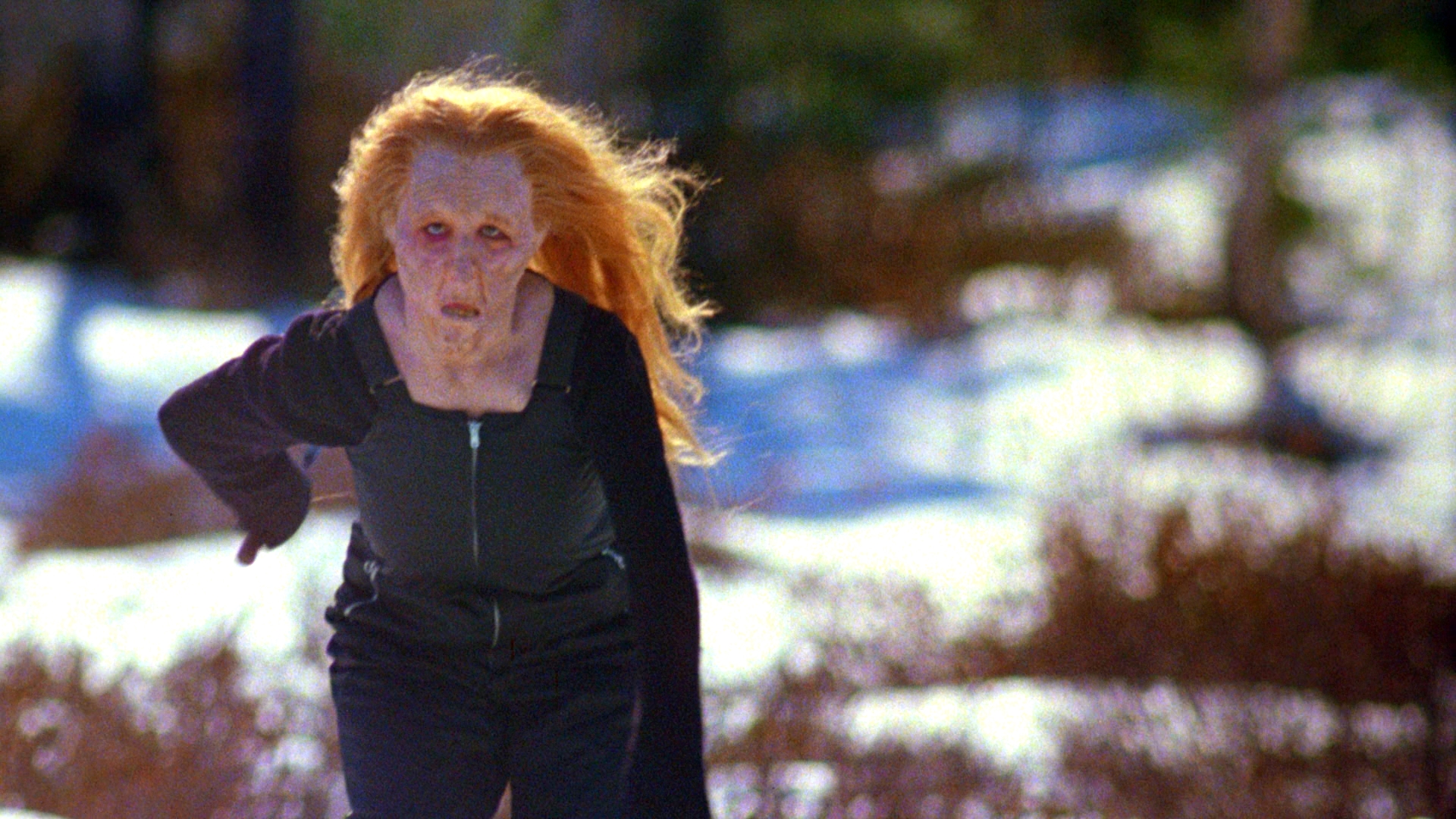
Curtains is a little too surreal to play out like a traditional slasher. There are tropes pulled straight from Italian cinema that aren’t found very often in US or Canadian slashers, tropes like repeated dream imagery, exaggerated visual style, and especially having two unrelated killers, these aspects feel like they’re pulled directly from the early filmography of Dario Argento.
That juxtaposition of Italian/Canadian sensibilities is ultimately a selling point for Curtains. It’s weird and it owns that weirdness. It seems to know exactly how bizarre it is, hence the ice skating scene, which make it impossible not to recommend because it simply has to be seen to be believed.
Yet at the same time, there’s an undercurrent of industry commentary that makes Curtains stand out that much more. It’s a bizarre, surreal and weird, and some of it is too jarring to really know what to make of it the first time around, but even if it’s blunt and weird, it’s got a keen eye for the industry and the way actors not only interact with one another, but the cutthroat nature of screwing someone over for the part and the environment that creates that desperation in an actor in the first place.
Post Views:
530
Liked it? Take a second to support Nat Brehmer on Patreon!